Beyond the Perfect Cut
Michelle Foo on Building Better Groomers, Earning a Dog's Trust and Raising the Standard of Pet Care
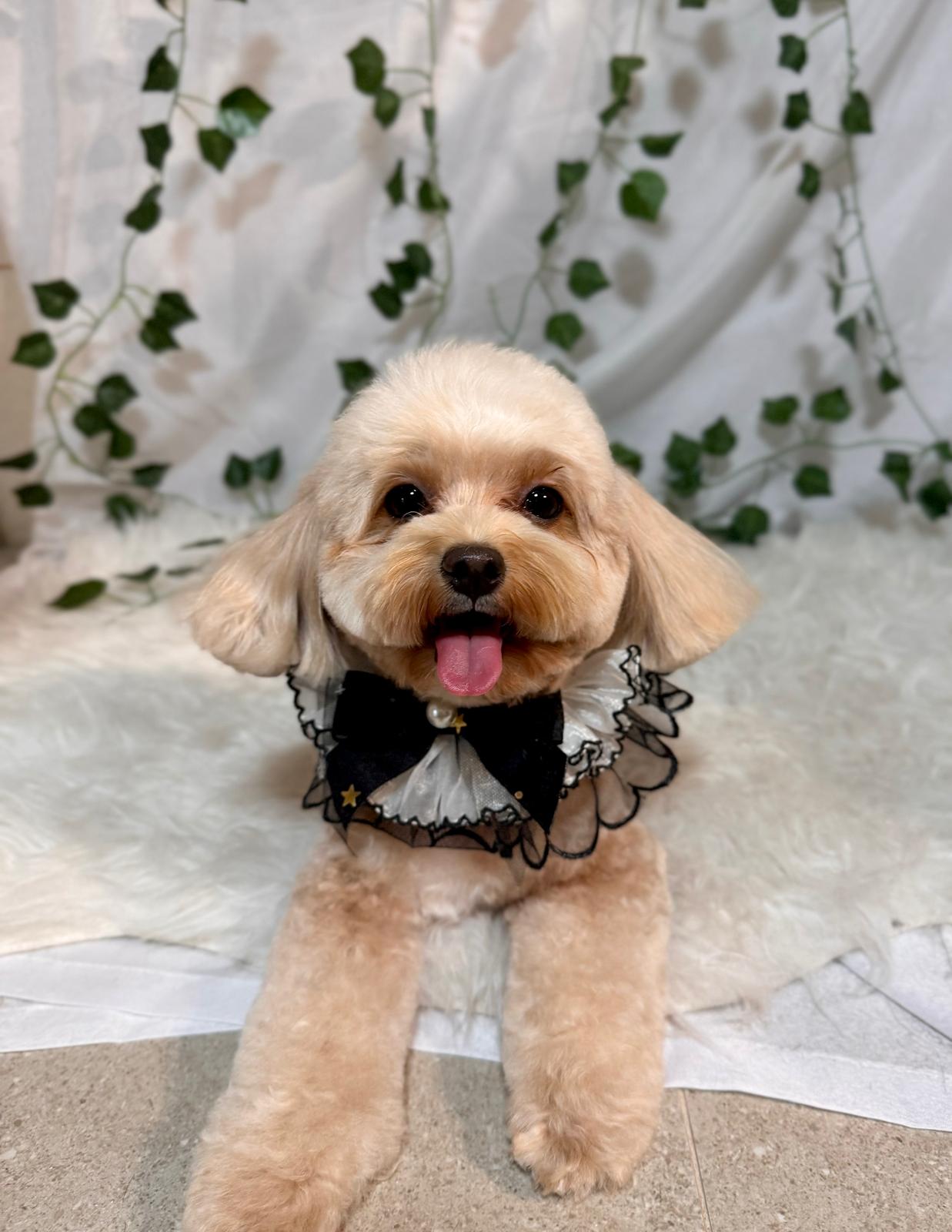
A beautifully groomed dog may be what we notice first.
The perfectly shaped coat. The neat paws. The carefully styled face.
But for Michelle Foo, founder of Supergroomers Pets Academy, what happens before that final look matters far more.
Behind every pair of scissors is an animal that may be nervous, uncomfortable, elderly, impatient or simply unable to understand what is happening. And behind every good groomer, Michelle believes, should be someone capable of recognising that.
For her, grooming has never been only about appearance.
It is about trust.
Her journey into the profession began unexpectedly, encouraged by a husband who recognised something in her before she recognised it herself. Years later, after working with tens of thousands of dogs, becoming an educator and grooming judge, and training a new generation of professional groomers, that original instinct remains at the heart of Supergroomers.
Treat the dog first. Style the coat second.
Pet Culture Asia sat down with Michelle to talk about how six Shih Tzus changed the direction of her life, why empathy cannot simply be taught from a textbook, what pet owners misunderstand about grooming and what she hopes the groomer of the future will look like.
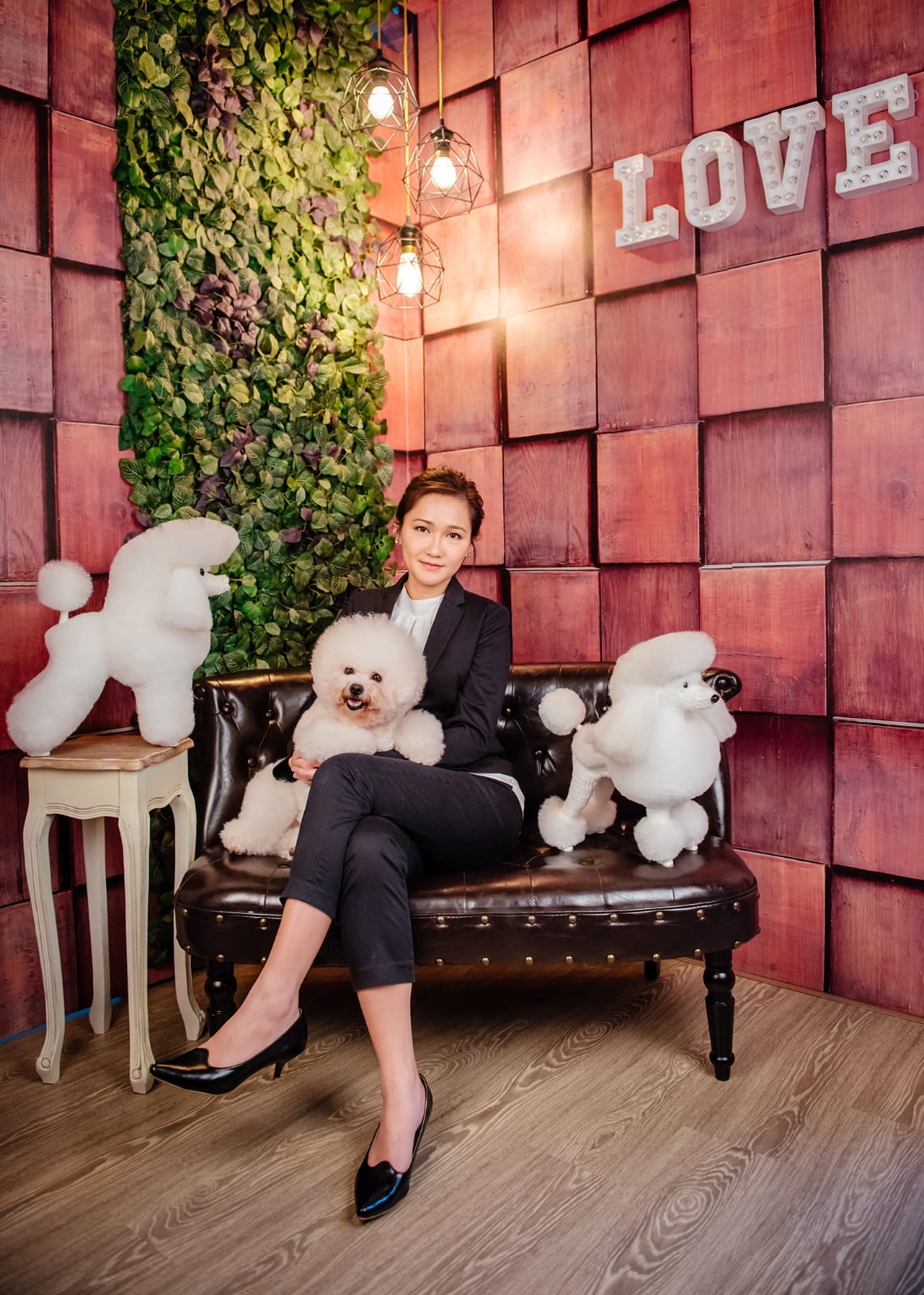
Michelle, take us back to the beginning. How did you first enter the world of pet grooming?
Sometimes in life, you don't know what you're suited for until someone else sees the potential in you.
For me, that person was my husband.
At the time, I had six Shih Tzus and I used to groom them myself. I didn't really know the proper techniques. I was simply figuring things out because I loved my dogs and wanted to take care of them.
My husband noticed how patient I was with them and suggested that grooming might actually be something I could pursue professionally. He supported me throughout the journey and paid for my training. I will always be grateful that he had that faith in me.
But there was something else behind it too.
I was always worried about how my dogs would feel if I sent them somewhere for grooming. I worried about whether they would be treated patiently, particularly if they became frightened or difficult to handle.
That concern planted the first seed.
I wanted to create an environment where dogs could be groomed safely and treated with dignity and kindness.
That idea eventually became part of the soul of Supergroomers.
After working with so many dogs, what have animals taught you that no textbook could?
**Patience.**
You can read about technique. You can study anatomy. You can learn different styles.
But patience is something very different.
Dogs cannot sit down and explain to us what they are feeling. You have to pay attention to their behaviour and learn to recognise what they are trying to communicate.
Sometimes you need to change what you're doing. Sometimes you need to slow down. Sometimes they simply need a moment.
Every dog is different.
Animals have also taught me that trust is earned, not demanded.
Interestingly, that lesson goes far beyond grooming. It applies when I teach students and even when I run a business.
You cannot force genuine trust.
You build it.
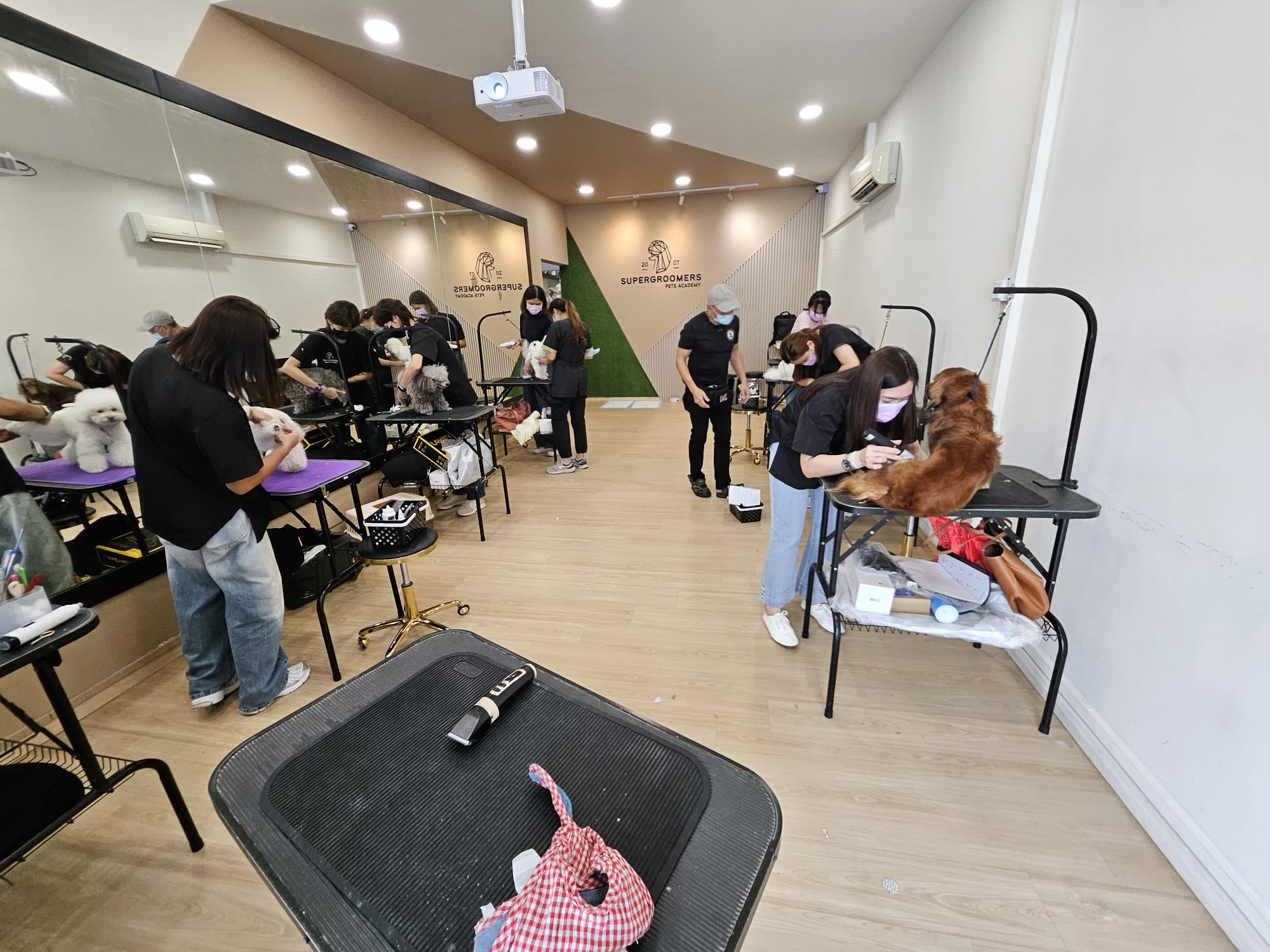
You eventually moved from professional grooming into teaching. Why was creating Supergroomers Pets Academy so important to you?
When I first learned grooming through a traditional school, I eventually opened my own shop.
One thing was always very important to me. The dogs had to be treated properly.
As I gained more experience, however, I started noticing how much grooming standards could differ from one person or shop to another.
It wasn't just styling.
It was also the way dogs were handled, the understanding of different coats, safety around equipment and knowledge of animal welfare.
I felt there needed to be stronger and more consistent professional education.
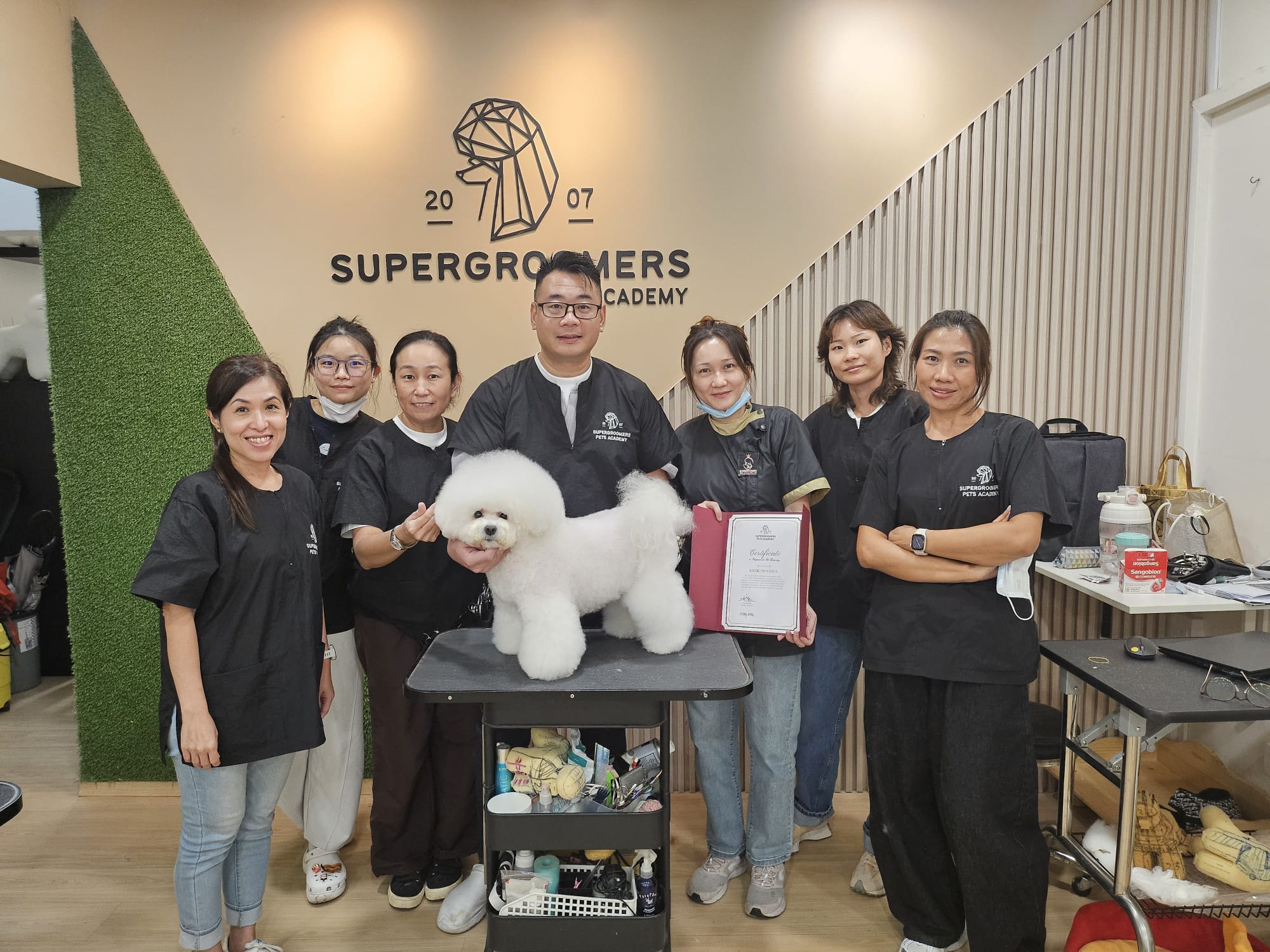
That became one of the reasons I created Supergroomers Pets Academy.
I didn't want to teach people only how to cut hair.
I wanted to help raise the industry's overall benchmark.
For me, there needs to be a bridge between pet safety and aesthetic excellence.
A professional groomer should understand technique, but also compassion, ethics and responsibility.
When someone walks into your academy with no experience, what tells you they could become a great groomer?
The first thing I look for is **heart**.
Technique can be taught.
Empathy is much harder to teach.
I want to understand why somebody wants to become a groomer and what they hope to achieve after graduation.
Passion can sustain a career much longer than simply thinking about how much money you can make.
Professional grooming involves a lot more knowledge than people sometimes realise.
Different breeds have different structures, coat types and grooming requirements. Groomers need to understand styling, angulation, coat care and safe handling.
For example, removing the coat from certain double-coated breeds without a proper reason can interfere with the coat's normal function and may affect how it regrows.
Then there is equipment.
We're working with sharp scissors and clippers around an animal that may suddenly move. Groomers need to understand how to remove mats without unnecessarily pulling at the skin and how to recognise when a dog is becoming too stressed.
If your only priority is finishing quickly so that you can move to the next dog, something has been lost.
A great groomer puts the dog's comfort ahead of the clock.
That's what I want our students to understand.
A skilled hand should always be guided by a kind heart.
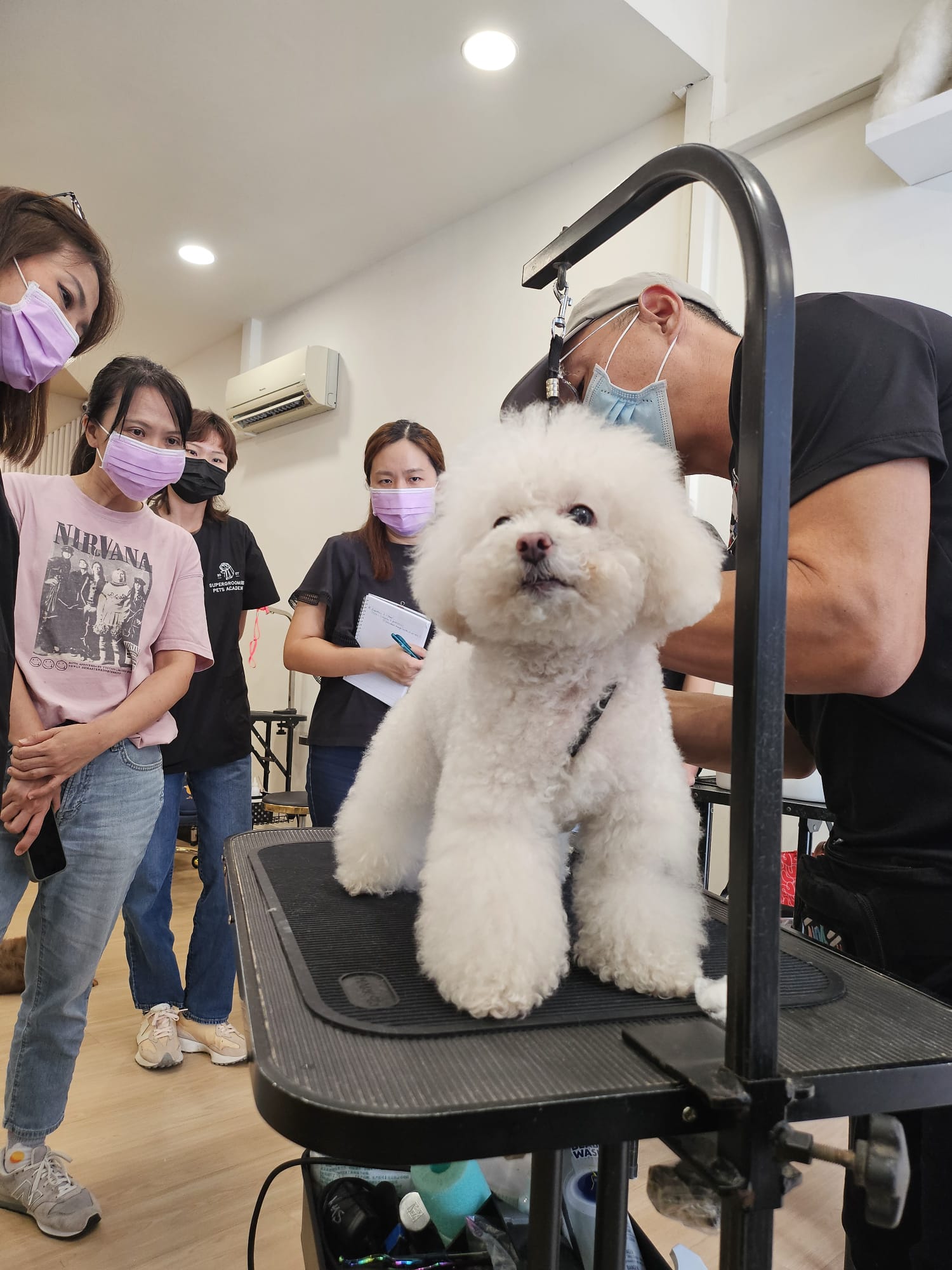
Many owners still think grooming is mostly about making their pet look good. What are they missing?
Grooming is part of a dog's overall care.
Nails are a simple example.
If they are allowed to become excessively long, they can become uncomfortable and may eventually affect the way a dog stands or walks.
Coat maintenance is another.
When a coat becomes severely tangled or matted, it isn't simply an appearance problem. Matting can cause discomfort and can make it harder to keep the skin clean and healthy.
Regular grooming also gives us an opportunity to notice things.
A groomer may see changes in the skin, ears, paws or body that an owner hasn't noticed yet. We aren't veterinarians, so we don't diagnose medical conditions, but we can tell an owner when something doesn't look normal and suggest that they have it checked.
I always tell owners that we should be partners in their pet's wellbeing, not adversaries.
Professional grooming is only one part of the relationship.
What owners do at home matters too.
Brushing, coat maintenance, keeping areas properly dry after bathing and paying attention to changes in the pet are all important.
I really hope owners listen when their groomers give constructive feedback.
Most professional groomers aren't trying to criticise them.
They are saying something because they care about the animal sitting on their table.
How much of professional grooming is actually about understanding behaviour?
A huge amount.
It is foundational.
You cannot groom an animal properly if you don't understand what that animal is communicating.
A dog might be nervous, elderly, reactive, uncomfortable or simply unfamiliar with the grooming process.
The groomer has to recognise those differences.
That is why animal behaviour forms part of the professional education we provide at Supergroomers.
Students need to understand that grooming isn't simply scissors and styling.
You can be extremely talented technically, but if you don't know how to build trust with the animal in front of you, something fundamental is missing.
You cannot style a dog you do not understand, and you cannot build a career on talent alone. You have to build it on trust.
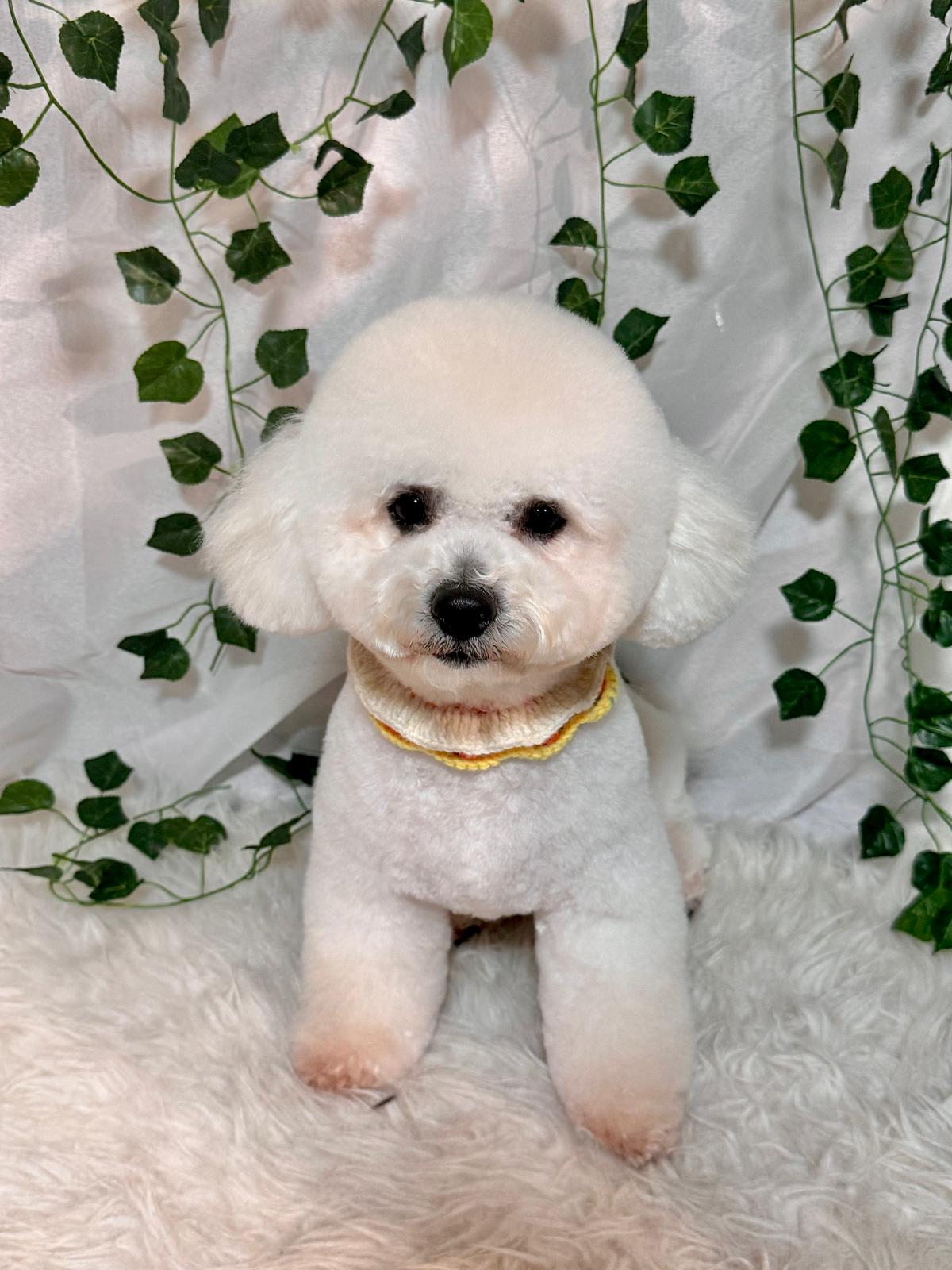
You've watched Singapore's relationship with pets change significantly. Have pet owners changed too?
Definitely.
One of the biggest changes I've seen over the past two decades is how informed owners have become.
People don't necessarily drop their dogs off blindly anymore.
They ask questions.
They want to know about qualifications. They look at portfolios. They pay attention to handling methods. They notice whether the environment is clean and they expect professional standards.
I think that's a very positive change.
For us as an academy, it means we can't stand still either.
We need to keep reviewing what we teach, developing courses and making sure that safety becomes second nature to our students.
I actually welcome that pressure.
When owners raise their expectations, groomers have to raise their standards.
And when groomers improve, the whole industry moves forward.
Ultimately, the dogs benefit.
As an educator and grooming judge, where would you like to see the industry improve?
I can only speak from my own experience and the approach we have developed at Supergroomers.
One decision we made was to let beginners build their foundation through mannequin practice before progressing further with live dogs.
Mannequins allow students to practise movements, technique, angles and scissoring without putting that initial learning pressure onto an animal.
When students work with live dogs, welfare has to come first.
Dogs need breaks. They need access to water and time to rest. They should never simply be treated as objects for somebody to practise on.
We are also very strict about safety around the grooming table and equipment.
These standards didn't come from one single manual.
They developed through years of experience and lessons learned along the way.
I don't claim that our approach is the only approach or that I know what is best for every academy.
What I do believe is that the industry becomes stronger when professionals are willing to share their practices and learn from one another.
I'm sharing what we do not because I want to lecture anybody.
I want to contribute.
What is it like seeing someone you trained become a successful groomer or even open their own business?
It gives me immense happiness and pride.
It means somebody is carrying forward the knowledge and values that I tried to pass on.
But there's something even bigger than that.
When I see our students succeed while continuing to treat animals properly, it gives me confidence that the industry is moving in the right direction.
I always remind our graduates to keep practising what they've learned and to remain humble.
Grooming keeps evolving.
There is always a new technique, a new style or something else to understand.
The moment we stop learning is the moment we stop growing.
What does the pet groomer of 2036 look like to you?
I think grooming will become much more systematic and professional.
There will be clearer progression in education and a better understanding of correct breed styling and standards.
Technology will also play a bigger role.
We'll see better equipment, better tools and probably entirely new ways of learning and working.
But I hope something never changes.
The human and humane side of grooming.
You can have the best technology in the world, but there is still a living animal standing in front of you.
That connection cannot disappear.
My vision isn't simply to make the Supergroomers name bigger.
I want its influence to grow.
I want to continue building a place where groomers learn technique alongside compassion.
I want owners to be part of the conversation rather than being left outside it.
We want to introduce more hands-on education, new tools, new styling methods and continually better safety practices.
And ultimately, I want the people who come through Supergroomers to feel empowered.
The groomers we train.
The owners we educate.
And hopefully, through both of them, the animals we are all here to care for.
That is the legacy I would like to leave behind.
More Than Grooming
Spend enough time talking with Michelle and one point becomes clear.
Her idea of professional grooming doesn't begin with a beautifully finished dog.
It begins much earlier.
With the moment a nervous dog is placed on a grooming table.
With the person standing beside it.
With whether that person notices the dog's signals, understands its coat, respects its limits and knows when to continue and when to stop.
The beautiful haircut comes afterwards.
Perhaps that is the quiet lesson behind the thousands of dogs that have passed through Michelle's hands and the students who now carry her teachings into salons of their own.
Great grooming may be an art.
But before it becomes an art, it has to be an act of care.
Supergroomers Pets Academy
Singapore
supergroomers.sg
Share this story
Discussion (0)
No comments yet. Be the first to share your thoughts!
Stay Connected
Get stories like this in your inbox
Join our community of design-minded pet lovers. Curated stories on culture, travel, and modern pet living — delivered to you.
Get Involved
Inspired? Share Your Story
Pet Culture Asia is shaped by its community. Pitch a story, upload a photo, or share a hidden gem.