A Place to Say Goodbye
Inside a Taoist Ritual of Remembrance for Departed Pets — at Hiang Tong Keng Temple, an ancient tradition is finding a place for a very modern kind of family.
At Hiang Tong Keng Temple, an ancient Taoist tradition of remembrance is finding a place for a very modern kind of family, and for the love that remains after a beloved animal is gone.
There is something about seeing a name that can make grief feel real all over again.
At Hiang Tong Keng Temple, some pet parents arrive quietly and place an offering in front of a tablet bearing the name of a companion who has passed away. Some stand there for a long time. Others become emotional the moment they see their pet's name.
Ariel from Hiang Tong Keng Temple has witnessed these moments repeatedly.
"Some pet parents come quietly, place an offering in front of the tablet and stand there for a long time," she says. "Some talk about their furkid very naturally, almost as though they are talking about a child. Others become emotional the moment they see their pet's name on the tablet."
It is a small scene, but it captures something much bigger.
What happens when an animal who was part of a family is suddenly no longer there?
At Hiang Tong Keng Temple in Singapore, departed pets can be remembered through a Pet Salvation Ritual, held as part of the temple's annual Zhong Yuan Salvation Rituals.
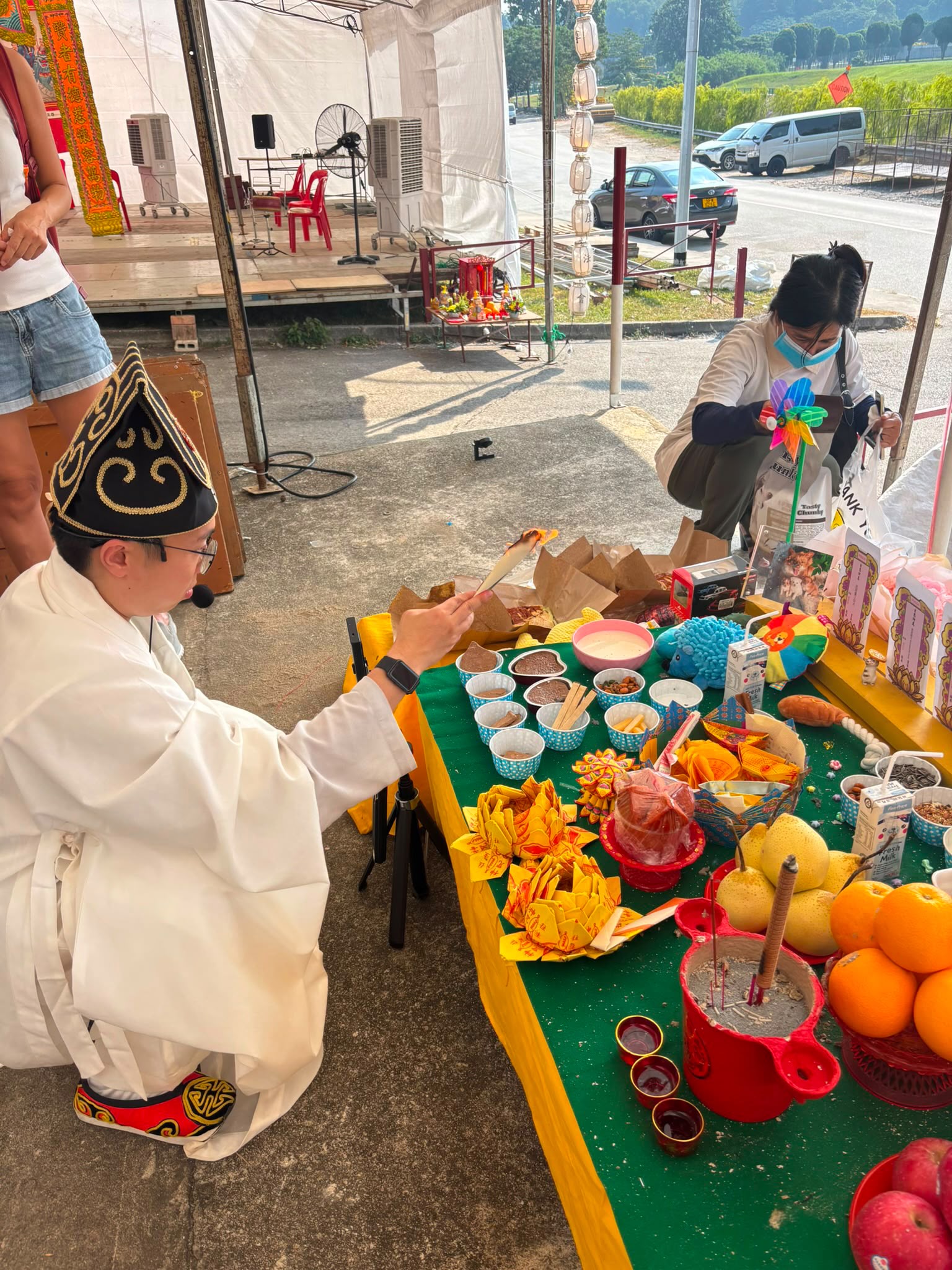
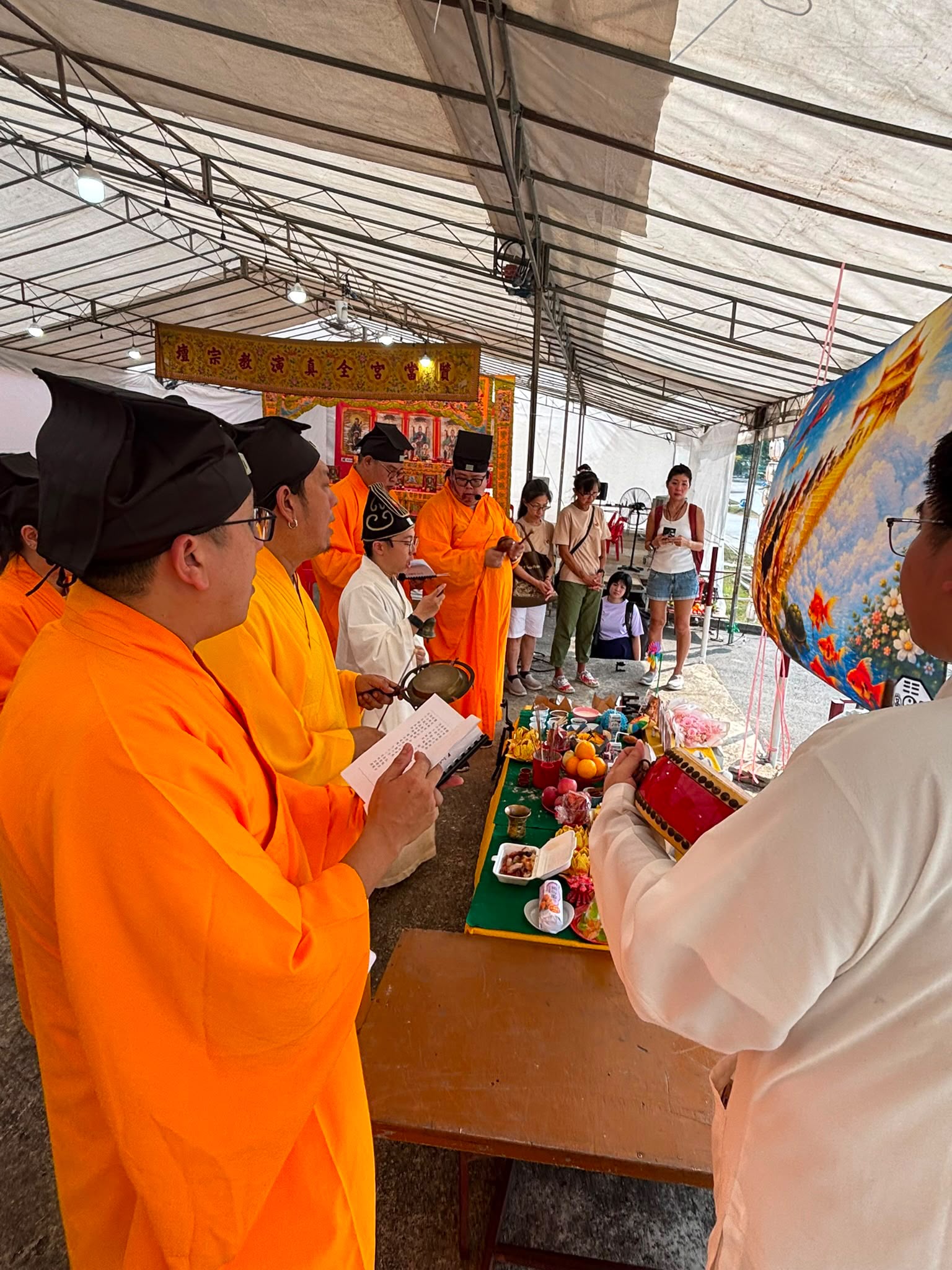
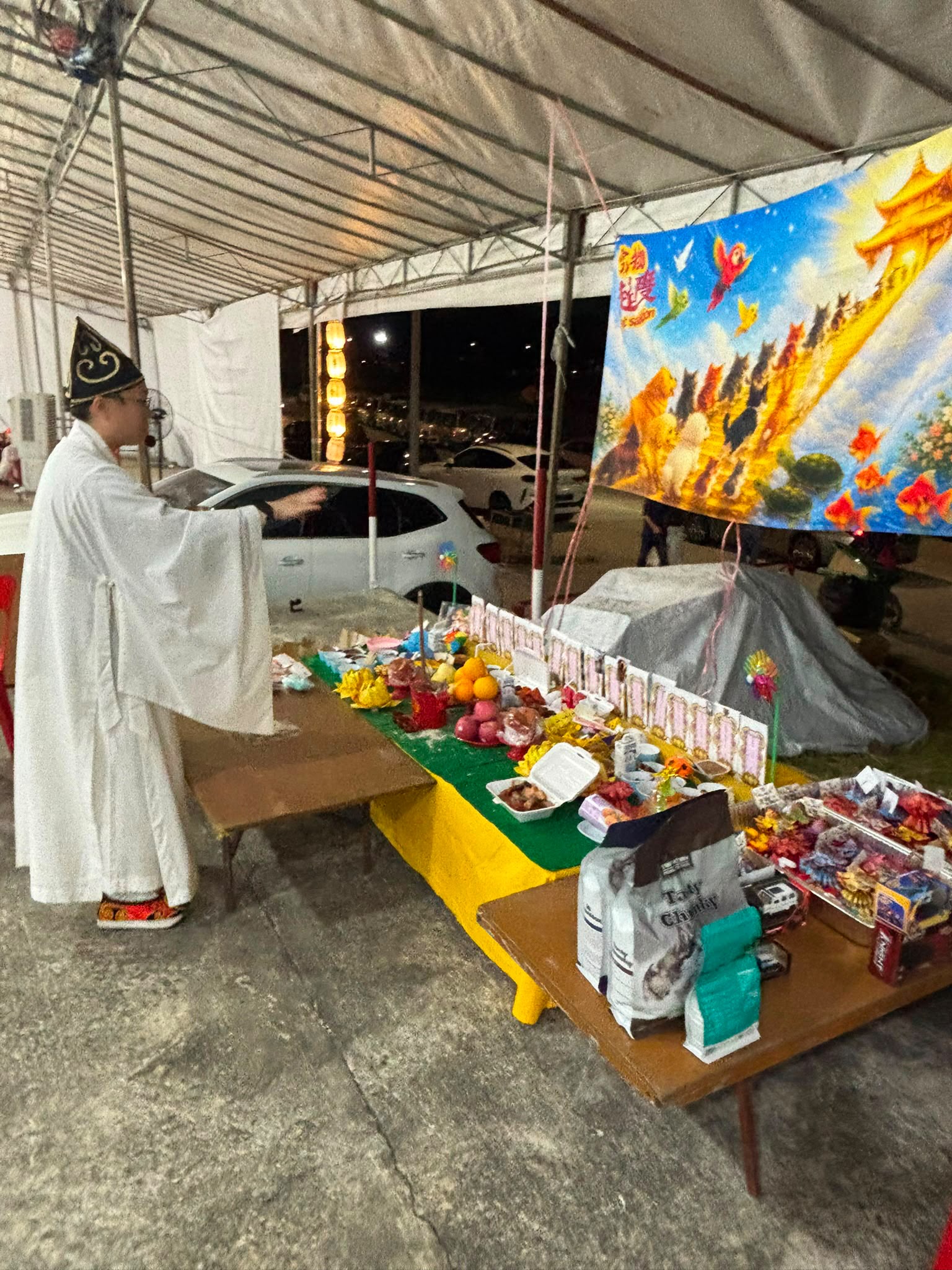
For three days, dedicated Pet Salvation Tablets remain in the temple's designated salvation area while Taoist ritual practitioners recite scriptures, conduct salvation rites and dedicate prayers and merits to the departed.
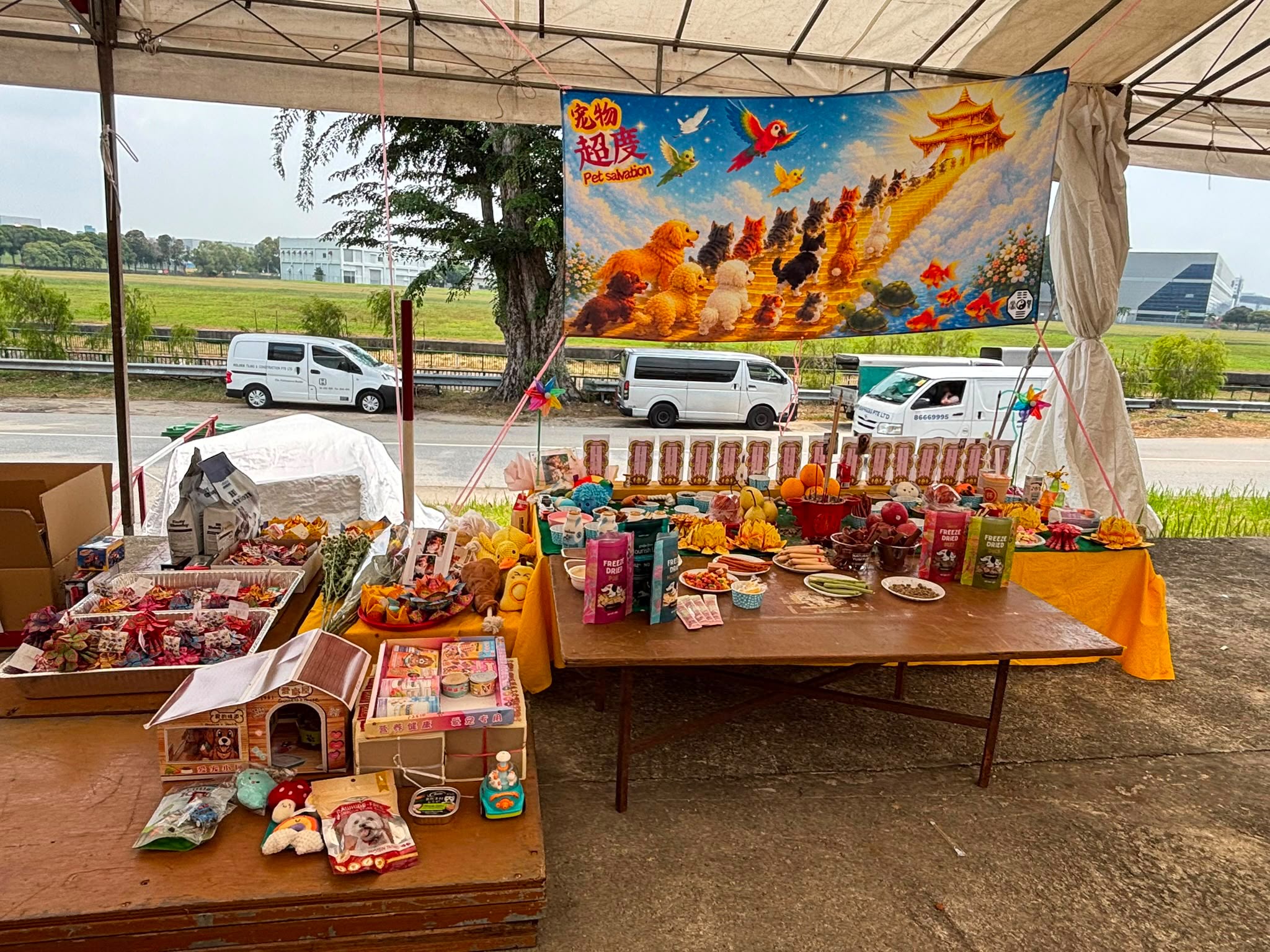
Food and other offerings are prepared daily. Pet parents may also bring something their companion loved while they were alive, perhaps a favourite food, treats or a toy.
At the end of the three days comes a formal send-off.
But for the people who take part, the ritual is not simply about what happens to the tablet.
It is about what happens to the love that remains.
Giving a Departed Pet a Name and a Place
When a pet parent registers a departed companion, the temple prepares a dedicated Pet Salvation Tablet.
"The tablet is important because it gives the animal a name and a place within the ritual," Ariel explains.
Throughout the three days, the tablet receives offerings and is included in scripture recitations, ritual prayers and the dedication of merits.
At the conclusion of the ceremony, the tablet and offerings are respectfully sent off according to Taoist ritual practice.
Within the ritual, prayers are dedicated toward peace, liberation from suffering and a good onward journey for the departed.
But the person making those prayers may be carrying their own suffering too.
The temple hears about the questions that remain after a pet dies.
Did they suffer? Did I do enough? Could I have done more?
Some pet parents carry guilt after making the painful decision to euthanise. Others still deeply miss their companion years later.
The ritual gives them something they can still do.
"I still love you, I remember you, and now I dedicate these prayers and merits to you," Ariel says. "May you be at peace."
For someone grieving an animal, that may be one of the most meaningful parts of the ritual.
A way to continue caring for a companion who can no longer be cared for in the physical world.
An Ancient Tradition and a Modern Relationship
Pet Salvation as a dedicated practice at Hiang Tong Keng Temple is relatively recent.
The tradition behind it is not.
At its heart is chaodu (超度), a long-standing Taoist practice of salvation rites for departed beings.
Through scripture recitation, offerings, repentance and the dedication of merit, such rites seek to help the departed find peace, ease suffering and attachments, and continue their spiritual journey.
Within Zhong Yuan traditions, remembrance has also extended beyond a person's own ancestors.
Salvation rites can include departed beings who may have nobody to make offerings or prayers for them.
It carries a wider idea of compassion for those who might otherwise be forgotten.
Hiang Tong Keng Temple sees Pet Salvation as an application of that older principle to a relationship that has become increasingly significant in modern society.
The temple does not suggest that Taoist temples centuries ago were conducting the same kind of pet memorial programmes that exist today.
Rather, it sees the practice as an expression of long-standing principles of remembrance, compassion and the dedication of merit.
What has changed is the relationship people have with their animals.
"They Were Family"
We asked the temple why people come.
One answer appears again and again.
"They were family."
Some pet parents have shared 10, 15 or even close to 20 years with their companions.
Their animals were present through different homes, relationships, careers, celebrations and difficult periods.
Over time, they became woven into the rhythm of the household.
Ariel has noticed the change not only in how people treat animals, but in the words they use.
"People don't introduce themselves to us as a dog's 'owner'," she says. "They will naturally say, 'I'm his mummy or daddy,' 'my brother or sister,' or 'this is my furkid.'"
She sometimes finds herself addressing them the same way.
"Ah Boy's mummy and daddy."
For Ariel, that language tells its own story.
Pets today often live inside the home, sleep beside their humans, celebrate birthdays and festivals, travel with their families and appear in family photographs.
Their lives become deeply intertwined with ours.
"So when that animal passes away," she says, "people also begin asking, how do I remember them? Is there something I can still do for them? Can I pray for them?"
The Pet Salvation Ritual is one answer.
Not because Taoist tradition has suddenly become a tradition created for pets.
But because a living tradition is responding to the way relationships between humans and animals have evolved.
The Things We Bring With Us
The offerings themselves can be deeply personal.
A favourite food. A treat. A toy.
Small objects that might seem ordinary to anyone else, but carry an entire history for the person placing them in front of the tablet.
The temple has seen pet parents spend long periods beside their companion's name.
Some speak about their animals almost as naturally as they would speak about a child or another member of the family.
And sometimes, the person standing before a tablet is not even the animal's owner.
That is where the story becomes something larger than personal grief.
Wang Wang and the People Who Came to Remember Her
One of the most striking examples from this year's ritual began far from Singapore.
Wang Wang was a stray mother dog in Jieyang, Guangdong, China. In June 2026, she and her young puppies became victims of a brutal act of animal cruelty that caused widespread outrage.
When people in Singapore learned that Wang Wang and her puppies would be included in prayers at Hiang Tong Keng Temple, something unexpected happened.
People who had never met her began contacting the temple.
They came to pay their respects. They brought offerings. They wanted her to be remembered.
"Some of these people had never personally known Wang Wang," Ariel says. "That demonstrated something very beautiful. You don't necessarily have to own an animal to feel compassion for it or to want it to be remembered."
Her story raised a question that extends far beyond one dog.
If a beloved pet can have a family to mourn them, what happens to an animal who never had one person to call their own?
What about strays? Community cats and dogs cared for by several people? Shelter animals whose lives pass through many hands?
Wang Wang's story showed that remembrance does not necessarily belong only to those who had a personal relationship with an animal.
Sometimes it belongs to anyone who believes that a life mattered.
"Perhaps the better question is not 'Who owned this animal?'" the temple reflects.
"But 'Who remembers this life?'"
Compassion Without Ownership
That question sits naturally within the wider spirit of the ritual.
For a pet parent, the dedication may be deeply personal.
This was my companion. I loved you. I remember you.
For an animal without an individual owner, the intention becomes broader.
Perhaps nobody called themselves your family. But your life still mattered. We remember you.
The temple believes that shelters, animal welfare groups, communities or groups of individuals could, in principle, collectively dedicate prayers and merits to departed animals, while any formal practice would still need to follow appropriate Taoist ritual guidance.
But the underlying idea is simple.
"Compassion doesn't require ownership."
In Singapore, that idea has particular meaning.
Community animals may not have one conventional owner, but they can still be loved by an entire neighbourhood.
One person feeds them. Another takes them to the vet. Someone else sees them every morning on the way to work. Children nearby may know them by name.
"They may have belonged to no one," the temple reflects, "but that doesn't mean they were loved by no one."
Perhaps that changes the question.
Not Who owned this animal?
But Who remembers this life?
The answer might be one grieving pet parent. It might be an entire family. It might be a neighbourhood.
Or it might be a group of strangers who heard that an animal had died and simply decided that its life deserved to be acknowledged.
Remembering With Love
For Ariel, the meaning of Pet Salvation ultimately comes back to the relationship between love and loss.
The ritual is not about turning an animal into a human ancestor.
It is about recognising that an animal was a living being with whom someone shared love and a profound bond, and that its life is worthy of compassion and remembrance.
Perhaps that is why the practice feels both ancient and deeply contemporary.
The principles are old. The relationships have changed. And here, the two have found a place to meet.
"The ritual is not about holding on to the departed pet," the temple explains. "It is about remembering with love while also learning to let go with love."
For someone who has lost an animal who was part of their family, perhaps that is what a place like this offers above all else.
A place to say goodbye.
And a place to say, one final time —
I remember you.
You mattered.
You were loved.
Share this story
Discussion (0)
No comments yet. Be the first to share your thoughts!
Stay Connected
Get stories like this in your inbox
Join our community of design-minded pet lovers. Curated stories on culture, travel, and modern pet living — delivered to you.
Get Involved
Inspired? Share Your Story
Pet Culture Asia is shaped by its community. Pitch a story, upload a photo, or share a hidden gem.